Village of Lindos
Back to all places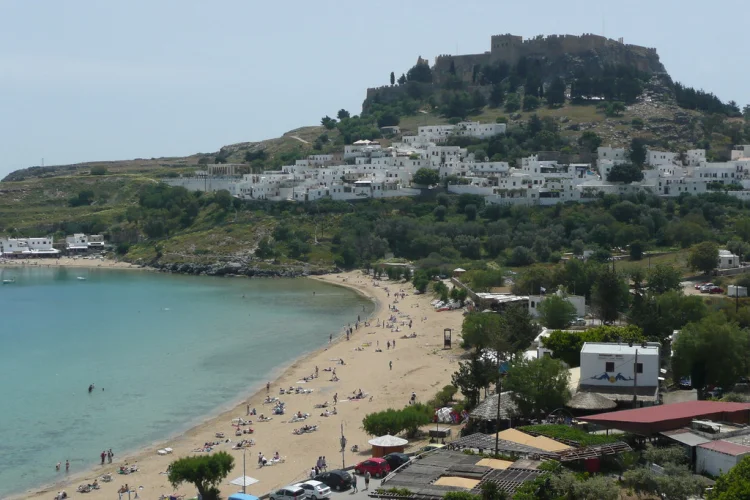
Nestled on the picturesque island of Rhodes in Greece, the village of Lindos stands as a beacon of ancient history and culture. Founded by the Dorians in the 10th century BCE, it swiftly became an important maritime and trading hub in the Aegean Sea. Lindos reached its zenith in the 6th century BCE, evidenced by its contribution of ships during the Greco-Persian Wars, particularly the Battle of Salamis in 480 BCE.
The village is dominated by the Acropolis of Lindos, an impressive citadel that bears the marks of successive historical eras. This sanctuary hosts the ruins of the Temple of Athena Lindia, which dates back to around 300 BCE, offering a splendid example of Doric architecture. The acropolis provides panoramic views of the surrounding harbors and the Mediterranean Sea, encapsulating the strategic importance of Lindos in ancient times.
Throughout the centuries, Lindos was influenced by various cultures, including the Romans, Byzantines, and Ottomans, each leaving a distinct imprint on the town’s architecture and cultural fabric.
The streets of Lindos are lined with medieval captain’s houses, known as "Captains’ houses," which blend unique Rhodesian architecture with classical influences, showcasing intricate facades and beautiful inner courtyards.
Lindos also played a role during the Italian occupation of the Dodecanese from 1912 to 1943, serving as a key administrative center.
Its historical significance and unique blend of architectural styles make it a captivating destination for those keen to explore the layers of history embedded within this ancient village. Today, it is not only a testament to its rich historical tapestry but also a thriving community and a magnet for travelers from around the world, drawn by its cultural legacy and scenic beauty.
Photo: Paul Stephenson
36.09185, 28.08567