Saint Nicholas Fortress
Back to all places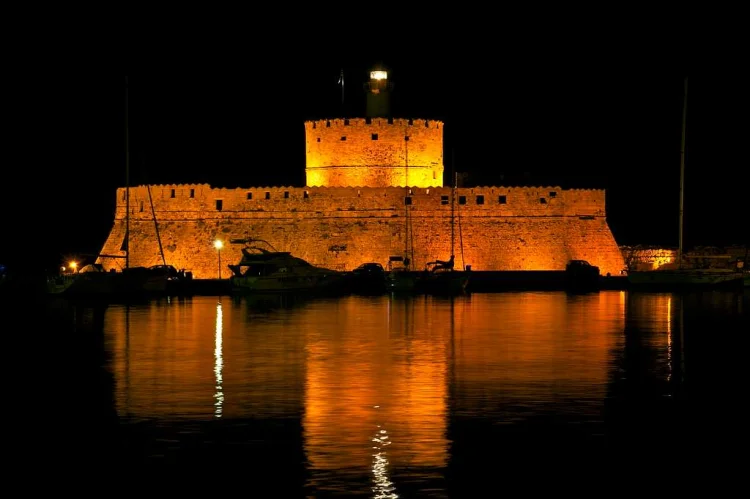
Saint Nicholas Fortress, standing proudly at the entrance of Mandraki Harbor in Rhodes, Greece, serves as a historical beacon of the island’s storied past.
Constructed in the late 15th century, the fortress was built by the Knights Hospitaller, a group of knights who played a pivotal role in the defense and administration of Rhodes during the medieval period. The fortress was named after Saint Nicholas, the patron saint of sailors, symbolizing its critical role in protecting the harbor and ensuring the safety of seafaring vessels.
The architectural design of Saint Nicholas Fortress showcases the military ingenuity of the time, featuring robust walls and strategic positioning that provided an advantageous point to thwart naval attacks, particularly from the Ottoman Empire. The fortress is most famous for its role during the siege of Rhodes in 1522 when it served as a key defensive point against the invading Ottoman forces led by Suleiman the Magnificent. Though the knights were ultimately overtaken, the fortress’s resistance became legendary, exemplifying the bravery and resilience of its defenders.
Over the centuries, the fortress has stood as a silent witness to the changing tides of history, from the Knights’ rule to Ottoman dominance, and later becoming part of modern Greece. It has also been the subject of various legends, including tales of secret tunnels connecting the fortress to the Palace of the Grand Master, supposedly used for escape during sieges or as clandestine meeting points during periods of intrigue.
Today, Saint Nicholas Fortress is not only a symbol of Rhodes’ rich historical tapestry but also an attraction for visitors intrigued by its legends and its pivotal role in the defense of the island. Exploring its bastions and walls, visitors can almost hear the echoes of knights preparing for battle or glimpse the ghostly sails of ships that sought refuge by its mighty embrace. This fortress not only captivates with its historical importance and architectural grandeur but also with the stories and legends that have permeated its stones over the ages.
Photo: picryl.com
36.45120, 28.22802