Library of Hafiz Ahmed Agha
Back to all places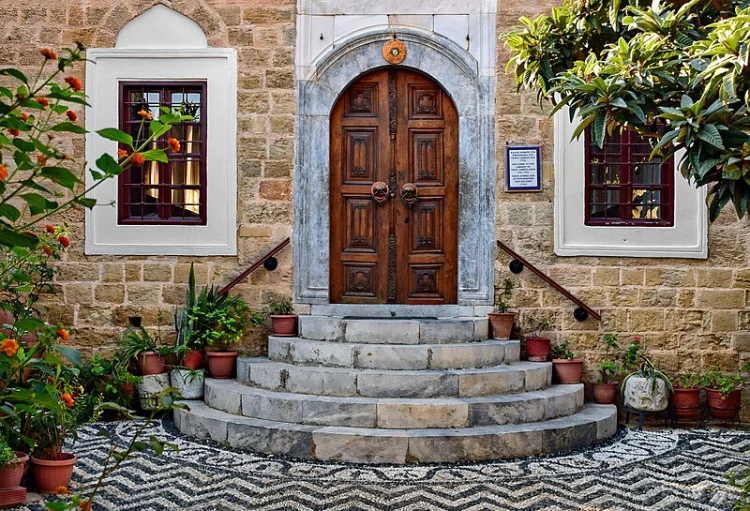
Constructed in the 18th century during the Ottoman occupation of Rhodes, the Library of Hafiz Ahmed Agha serves as a significant historical edifice, embedded deep within the heart of the traditional district of Rhodes, Greece. The library was founded in 1793 by Hafiz Ahmed Agha, a reputed Turkish admiral who settled on the island during the late Ottoman era. It stands as a testament to the intellectual pursuits prevalent during that period, housing an impressive collection of over 2,000 volumes, including rare manuscripts and books primarily in Turkish, Arabic, Persian, and Greek.
The architecture of the Library of Hafiz Ahmed Agha is a captivating example of classical Ottoman design with intricate embellishments that accentuate its historical importance and the multicultural tapestry of Rhodes.
Positioned near the northern tip of the medieval city, a UNESCO World Heritage site, the library is not only a beacon of knowledge but also a symbol of the cultural fusion characteristic of the island’s diverse past.
Historically, this library has played a crucial role in the education and cultural development of the community, being one of the few sources of scholarly materials in the Dodecanese islands during the Ottoman period. The library’s resilience through various historical epochs—surviving the Italian occupation during World War II and the subsequent integration of the Dodecanese into Greece—speaks volumes of its significance.
Among its treasured holdings, the library features several fascinating artifacts, including Islamic manuscripts, astrolabes, and antique maps, which draw academics and history enthusiasts alike.
Legends even suggest that the library houses undiscovered manuscripts hidden within its walls, waiting to reveal more about the complex history of the Aegean region.
Today, the Library of Hafiz Ahmed Agha continues to enchant visitors with its rich cultural heritage and serves as an invaluable research center for historians studying the Ottoman influence in the Aegean, as well as the broader currents of Mediterranean history.
Photo: Jocelyn Erskine-Kellie
36.44369, 28.22389