Eleousa
Back to all places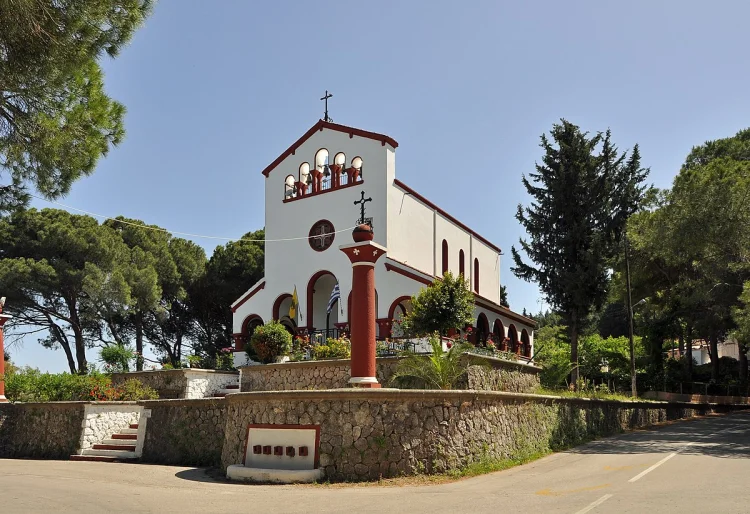
Nestled in the heart of Rhodes, Greece, Eleousa is a captivating village steeped in historical and cultural significance. Occupying a region abundant with lush greenery and natural springs, it presents an enigmatic blend of Italian architectural influence and local Greek culture, dating back to the early 20th century.
Originally developed during the Italian occupation of the Dodecanese Islands from 1912 to 1943, Eleousa was part of an ambitious plan to modernize rural Rhodes. The village was strategically constructed to house Italian soldiers and later converted to accommodate a sanatorium, reflecting Italy’s broader geopolitical ambitions during that era.
Key structures, like the imposing Sanatorium building and the derelict yet picturesque Fascist-period buildings, reveal a period when Italian art-deco styles were merged with local Greek architectural traditions, designed to promote fascist ideologies of strength and permanence. Additionally, the village is home to the Church of Agios Nikolaos, built by the Italians during their occupation, which showcases intricate designs and an imposing presence in the small village.
Nearby, the remnants of an Italian aqueduct further testify to the efforts to harness the local environment for more efficient water management during that period.
Eleousa’s surroundings are also historically important; the area played a significant role during World War II. As a site of confrontation and temporary occupation, it reflects the turbulent dynamics of the broader Aegean region during the mid-20th century.
Today, Eleousa stands as a unique historical site, telling the dual story of foreign occupation and local resilience, offering visitors a deep dive into an oft-overlooked chapter of Greek history.
Photo: Marc Ryckaert (MJJR)
36.27381, 28.02704