Diagoras monument
Back to all places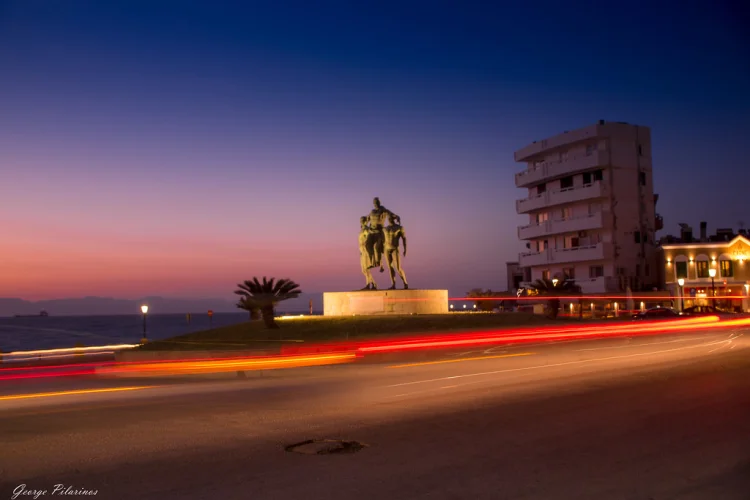
Enshrined in bronze on the bustling square of Archbishop Chrysanthus in Rhodes, the Diagoras Monument immortalizes an iconic scene from ancient Greek history. This sculpture captures a victorious moment for Diagoras of Rhodes, a celebrated athlete, cradled triumphantly by his sons, Damagetos and Akousilaos, after their respective successes at the Olympic Games over two millennia ago.
Diagoras, a renowned pugilist from the 5th century B.C., hailed from a family of champions and his legend is steeped in the lore of the ancient Olympics. According to tradition, Diagoras himself won in boxing at Olympia, and his success was emulated by his sons and descendants, turning their family into a symbol of athletic prowess and nobility. As a point of cultural pride, the monument not only celebrates this athletic dynasty but also serves as a poignant reminder of the rich historical legacy of Rhodes, a nexus of Greek culture and political power in ancient times.
The depiction of Diagoras lifted by his sons in the sculpture embodies the glory and honor of the Olympic tradition, an ethos that resonated deeply within Greek culture.
It is said that upon witnessing his sons’ victories, bystanders in Olympia told Diagoras he could die happily, having reached the pinnacle of human achievement. This tale has permeated through generations, crystallizing the monument as a site of inspiration and reverence.
Installed near one of the city’s scenic embankments, the Diagoras Monument not only attracts history enthusiasts but also offers passersby a glimpse into the familial bonds and ancient traditions that shaped the competitive spirit of the Greeks. Each element of the sculpture, from the strained muscles of the sons to the dignified expression of Diagoras, conveys a narrative of strength, unity, and celebration, making it a compelling piece of public art deeply intertwined with the heritage of Rhodes and the Olympic saga.
Photo: George Pilarinos
36.44993, 28.21590