Aquarium of Rhodes - Hydrobiological Station HCMR
Back to all places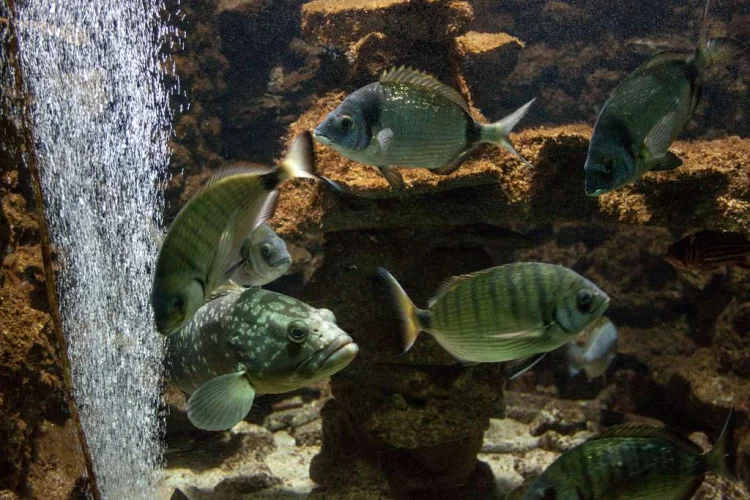
The Aquarium of Rhodes, officially known as the Hydrobiological Station of the Hellenic Centre for Marine Research, is nestled at the northernmost tip of Rhodes island, within the historical building at Enydreiou Square.
An architectural marvel, it exemplifies the Art Deco style from the Italian occupation period of the 1930s, reflecting the fusion of scientific purpose and aesthetic elegance. It serves a dual role, functioning both as a research station for marine biology and oceanography and as a public aquarium that offers a glimpse into the diverse marine life of the Mediterranean.
This fascinating establishment initially opened its doors in 1937, during an era marked by the Italian regime’s emphasis on enhancing the infrastructural and cultural appeal of the Dodecanese islands. Designed by the Italian architect Armando Bernabiti, the building is notable for its streamlined forms and nautical motifs, which subtly reflect its aquatic function. The front facade, adorned with representations of marine flora and fauna, immediately sets the thematic focus for visitors.
The interior of the Aquarium of Rhodes is equally captivating, with a series of tanks that are ingeniously constructed to mimic natural marine environments. Each tank houses a variety of species, from delicate seahorses and vibrant corals to formidable sharks and rays. These displays not only educate the public but also play a crucial role in the conservation efforts for marine ecosystems.
Legend enhances the charm of this place. It is said that during the 1940s, amidst the turmoil of World War II, the aquarium served as a covert meeting point for resistance fighters. These unsuspected rebels reportedly used the cover of marine research to exchange information and plan their strategies against the Axis powers.
The aquarium has also been involved in numerous groundbreaking research projects over the decades, contributing valuable data to the global scientific community’s understanding of marine biodiversity and environmental changes. Numerous species, previously unknown to science, have been discovered in the depths explored by researchers from the station.
Today, the Aquarium of Rhodes stands not only as an educational center but also as a reminder of the historical narratives that have shaped the island and the scientific endeavors that continue to protect its natural heritage.
Photo: picryl.com
36.45711, 28.22073