Acropolis of Rhodes
Back to all places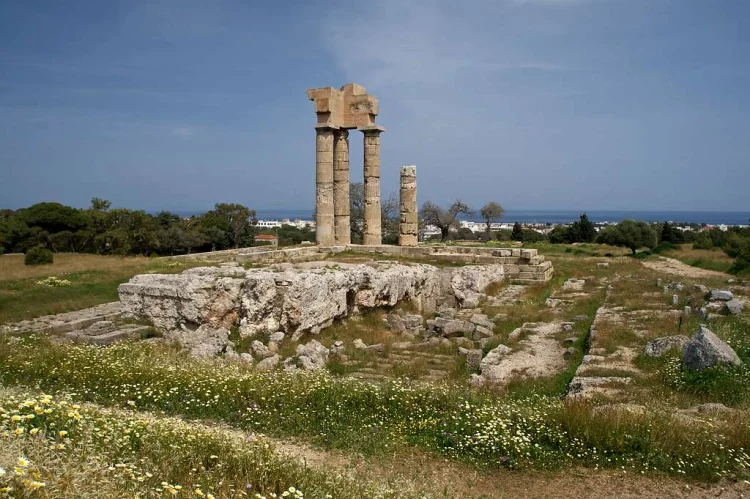
The Acropolis of Rhodes, once a strategic observation point during the Napoleonic Wars, carries a rich history that stretches back to antiquity. Perched atop the highest summit of the town, and historically known as the point where Admiral Smith, a British military leader, oversaw naval operations, the site was renamed Monte Smith by Italian occupiers who sought to replace Greek names with Latin counterparts during their reign. This hilltop provided crucial visibility over the surrounding Aegean Sea, offering clear views of adjacent Greek islands and the Turkish coast, thus making it a pivotal maritime lookout.
Traditionally, every Greek city in ancient times boasted an acropolis — "akro" meaning the highest point and "polis" meaning city. These acropolises served not just as the political and religious hearts of their cities, but also as symbols of communal identity and resilience.
The main temple on the Rhodes acropolis was dedicated to Apollo, the god of music, truth, and healing, reflecting the spiritual and cultural priorities of the city’s inhabitants dating back to the 3rd century BC. Adjacent to the main temple ruins are remnants of an ancient stadium and a small odeon. The stadium was a vibrant arena where athletes competed in games, echoing the glory of Rhodes’ athletic heritage which is closely tied to the legendary Diagoras family. Diagoras himself, along with his sons and grandsons, were celebrated Olympic victors, and their legacy is woven deeply into the cultural fabric of Rhodes, influencing the names of the local airport, football teams, and other landmarks. Nearby, the ruins of what was once a bustling gymnasium mark the spot where athletes trained rigorously for local competitions, underscoring the historical importance of physical prowess and competition in Greek society. Through these layers of historical vestiges, the Acropolis of Rhodes offers a profound link to the past, serving as both a testament to the island’s rich cultural legacy and a beacon of its enduring influence throughout history.
Photo: picryl.com
36.44022, 28.21054